

If your HVAC system is more than five years old, there’s a good chance it runs on R-410A refrigerant. When you or your technician discover a refrigerant leak—whether in the condenser coil outside or the evaporator coil (or coil section of your air handler or furnace)—you’re facing one of the trickiest and most expensive decisions in home comfort. At Bree HVAC Contractor in Austin, Texas, we see this situation every day across the Greater Austin area: a leak is confirmed, but the path forward isn’t obvious. In this article we’ll walk you through what coil leakage means, your real-world options, and why the refrigerant transition away from R-410A makes coil replacement harder and full system replacement a more common—and often smarter—choice.
What Is a Coil Leak and Why Does It Matter?
Your air conditioner or heat pump doesn’t “use up” refrigerant. The same refrigerant is sealed inside the system and circulates between the outdoor unit (condenser) and the indoor unit (evaporator coil, often inside an air handler or attached to a furnace). When a leak develops in one of those coils, refrigerant escapes. The system loses capacity, efficiency drops, and the compressor can overwork and fail. Even a small leak will get worse over time, so ignoring it is not an option.
Leaks can occur in the condenser coil (outside, exposed to weather and debris) or in the evaporator coil (indoors, often in a tight space). Corrosion, vibration, manufacturing defects, or physical damage can all cause leaks. Once a technician confirms a leak—usually with a combination of pressure testing, electronic leak detection, or dye—the next step is to decide how to fix it. That’s where things get complicated, especially for R-410A systems.
Our short video on refrigerant leak and what it means for your system.
Option 1: Find and Repair the Leak
In theory, the most straightforward approach is to locate the leak and repair it. For some leaks—especially in accessible areas or at a single joint—this can work. A qualified technician will use leak detection equipment to find the exact spot, then braze or seal the leak and recharge the system with the correct amount of R-410A. If the repair is done right and no other weak spots exist, the system can run for years longer.
In practice, coil leaks are often hard to pinpoint. They can be tiny, intermittent, or in places that are difficult to reach. Multiple leaks can develop over time, so fixing one doesn’t guarantee another won’t appear soon. Repairing a coil can also mean partial disassembly of the unit, which adds labor cost. And for older R-410A systems, you’re still left with equipment that relies on a refrigerant that is being phased out—meaning future repairs and recharges will only get more expensive and less sustainable. So while leak repair is an option, it’s not always the best long-term solution.
Option 2: Replace the Coil
When repair isn’t reliable or the leak is in a section of the coil that can’t be fixed practically, the next idea many homeowners have is to replace just the coil—either the condenser coil or the evaporator coil. That way you keep the rest of the system (compressor, air handler, furnace, etc.) and only swap the failed part. In a perfect world, that would be a cost-effective middle ground. In today’s market, it’s anything but simple.
R-410A is being phased out. Regulations and industry shifts have made R-410A equipment and components harder to find. Coils that match your exact model and year are often discontinued or in very short supply. Even “compatible” coils may be back-ordered for weeks or months, and the price has gone up as supply has dropped. So when we tell customers that a new coil is an option, we also have to be honest: finding the right coil for an older R-410A system is increasingly difficult, and waiting for a part can leave you without cooling or heating for a long time. For many people, that makes coil-only replacement a poor or even impossible path.
Option 3: Full System Replacement—Why It’s Often the Best Choice
When repair is uncertain and coil replacement is costly or simply unavailable, the remaining option is to replace the entire system: the outdoor condenser unit and the indoor unit (air handler or furnace with evaporator coil). Yes, it’s the most expensive option upfront. But in the context of the R-410A phase-out, it’s also the option that makes the most sense for the long run.
New residential air conditioners and heat pumps are no longer built for R-410A. The industry has moved to next-generation refrigerants such as R-32 and R-454B. These refrigerants have lower global warming potential and meet current and upcoming regulations. So when you install a new system today, you’re not just fixing a leak—you’re stepping into equipment that is available, efficient, and compliant for years to come. You also get a full manufacturer warranty and modern efficiency (SEER2, etc.), which can cut your energy bills and improve comfort.
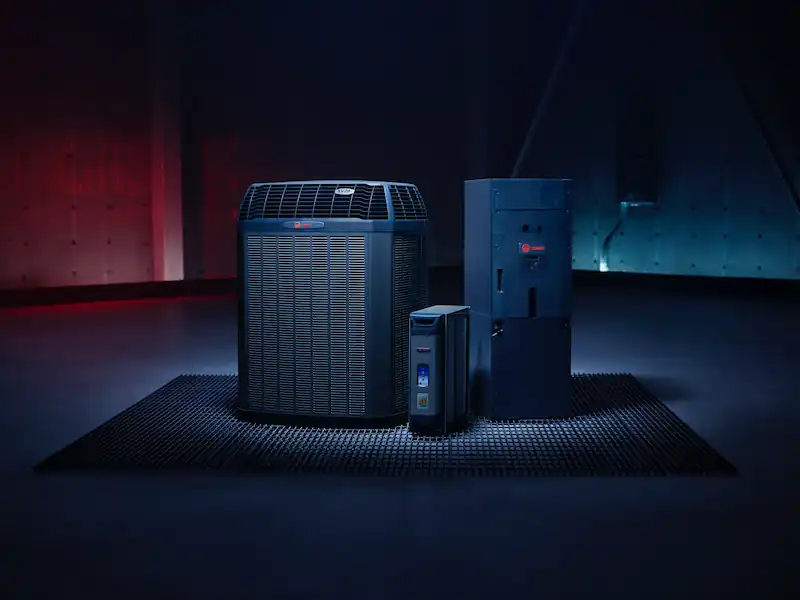
It’s important to understand that R-32, while better than R-410A, is also on a path toward stricter regulation in the future. At Bree HVAC Contractor we focus on equipment we trust for the long term. That’s why we recommend and install Trane systems that use R-454B refrigerant. Trane has been a trusted name year after year, and their units are built with quality materials and proven performance. Choosing a brand like Trane with R-454B gives you peace of mind that your investment is aligned with where the industry is headed, not where it used to be.
What You Can Expect When You Have a Coil Leak
If a technician has told you there’s a leak and they’re not sure exactly where it is, or if the leak is in the coil and repair or coil-only replacement isn’t practical, you’re not alone. Many homeowners with R-410A systems are in the same situation. Here’s what you can expect:
- Repair: Possible in some cases, but not always reliable long-term; depends on leak location and condition of the rest of the system.
- Coil replacement: Theoretically an option, but matching coils for older R-410A units are scarce, often expensive, and may involve long wait times.
- Full system replacement: Higher upfront cost, but you get a new system with current refrigerant (e.g., R-454B), full warranty, and better efficiency—and you avoid the ongoing hassle of hunting for R-410A parts and refrigerant.
We recommend getting a clear diagnosis and a written estimate that compares repair, coil replacement (if available), and full replacement. That way you can make an informed decision based on your budget, how long you plan to stay in the home, and what’s actually available in the market for your specific equipment.
One more point: if you had another company diagnose the leak and you’re now shopping for a second opinion or for someone to do the work, that’s completely normal. At Bree HVAC Contractor we’re happy to verify the diagnosis, re-check pressures and leak detection if needed, and then present you with clear options and pricing. You don’t have to commit to the first recommendation you hear—especially when the decision involves thousands of dollars and the comfort of your home for the next decade or more.
Next Steps: Schedule, Write, or Call
At Bree HVAC Contractor we specialize in honest assessments and quality installations. If you’re dealing with a coil leak or low refrigerant and aren’t sure which path is right for you, we’re here to help. Schedule a visit, send us a message, or give us a call—we’ll walk you through your options and recommend the solution that makes the most sense for your home and your situation.
Bree HVAC Contractor — your trusted partner for HVAC diagnosis, repair, and replacement in Austin, TX and the Greater Austin area. We work with proven brands like Trane and use R-454B refrigerant so you get equipment that’s built to last and ready for the future.
